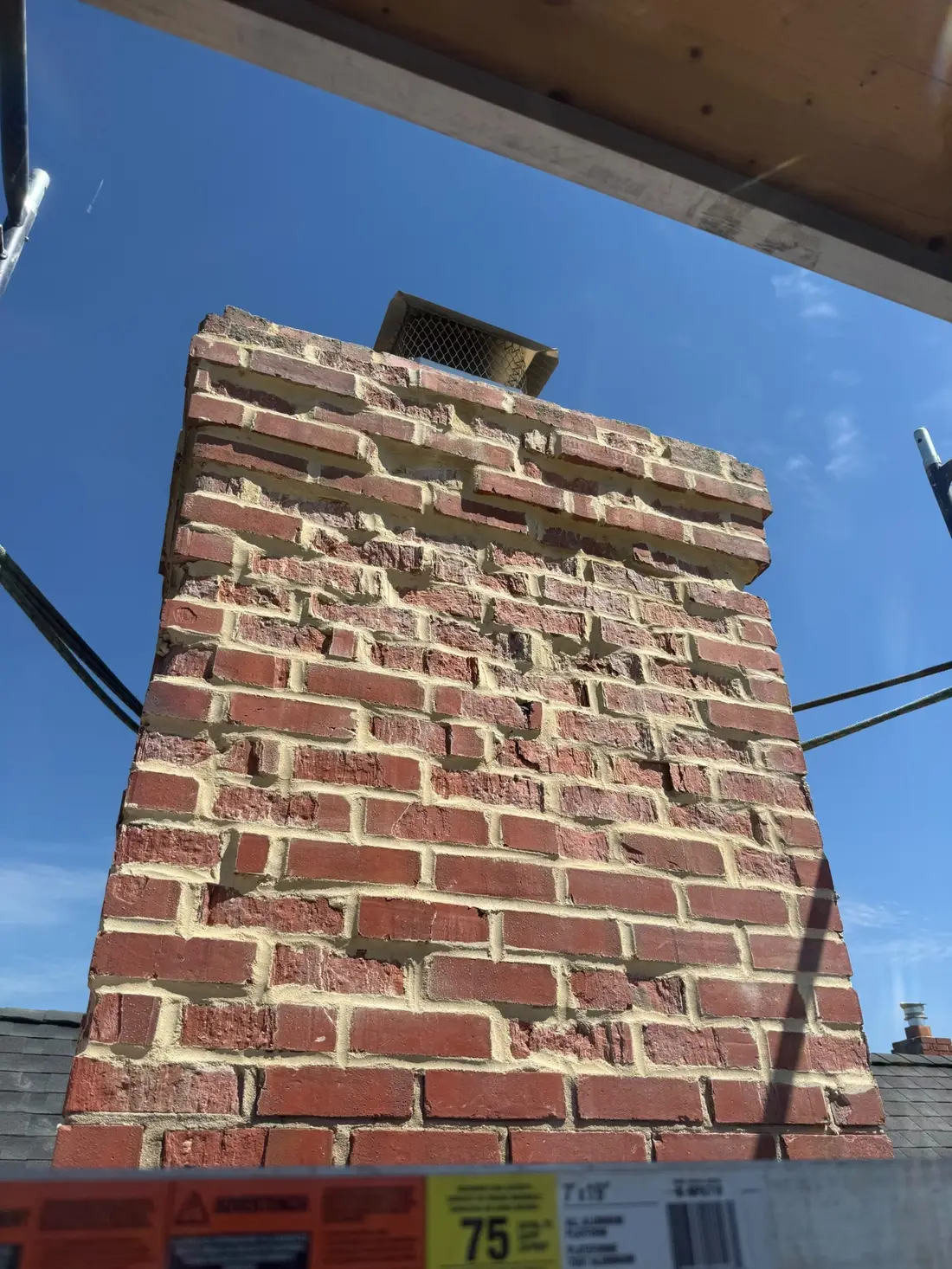
Chimneys deteriorate in the open, in plain sight, over years — and most homeowners walk past the evidence daily without a translation. Here are the nine signs that matter, what each one means, and how urgent each actually is.
1. White staining on the brick (efflorescence)
That white, crusty bloom on the chimney's exterior is salt — left behind by water that traveled through the masonry and evaporated at the surface. Efflorescence itself wipes off; what it announces does not: water is moving through your chimney, and masonry that passes water is masonry in the process of failing. Find the entry point — usually the crown, cap or joints — before the water starts taking brick faces with it.
2. Mortar joints that are recessed, sandy or missing
Run a key along a joint (from a ladder, or have us do it): sound mortar resists; failing mortar sands away or has already recessed a half-inch into the joint. Mortar is the chimney's sacrificial layer and its renewal — repointing — is the classic repair that prevents rebuilds. Joints at this stage are a maintenance item. The same joints ignored for a decade become loose courses and structural work.
3. Brick faces popping off (spalling)
Thin slices or whole faces of brick lying at the chimney's base, or missing from the stack, mean water inside the brick froze and expanded until the face let go. Spalling is freeze-thaw damage with the evidence on the ground. Scattered spalling is a repair; widespread spalling means the water problem has been running for years and the assessment should be honest about how much sound brick remains.
4. Rust — in the firebox, on the damper, streaking the stack
Rust is water's signature in metal. A damper that is rusting through, rust streaks below the firebox, or rust trails down the exterior from the cap: each locates a water path. A galvanized cap rusting out is the most common and the cheapest to fix — before it fails open entirely and the flue becomes a rain funnel.
5. Water in the firebox, or a musty smell after rain
Drips you can hear, a wet ash pile, damp staining on firebox walls, a sour smell after storms: water is entering the flue itself — through a missing cap, a cracked crown that channels it in, or flashing that has let go. Water inside the system rusts dampers, erodes liner joints and feeds the deterioration of everything it touches. Our leak guide traces each entry point.
6. A crown you can see is cracked
From the ground with binoculars, or from any inspection: a crown split by visible cracks, or sections visibly displaced, is an open door at the very top of the masonry. Crown failure is the first domino in most masonry deterioration — and, caught at the crack stage, one of the least expensive repairs on the chimney.
7. Smoke staining above the fireplace opening
Soot shadows on the face above the firebox record exhaust rolling out of the opening instead of drafting up — a performance problem with causes from a blocked flue to a damper that will not open to a flue sized wrong for the opening. It is the fireplace telling you, in writing on your wall, that something in the system needs a professional look.
8. Pieces of flue tile in the firebox
Thin, curved shards of clay-colored material in the ash are pieces of your flue liner — cracked tile falling as it fails. This is a safety sign, not a maintenance sign: the flue's containment is compromised, and a camera inspection should precede the next fire, with relining the likely remedy.
9. A leaning, bulging or separating stack
The structural sign. A chimney pulling away from the house, bulging at a course line, or leaning visibly has moved beyond repair-scope joints — it needs a masonry assessment promptly, because stacks that move eventually fall, and they choose stormy nights to do it. Do not let anyone repoint over structural movement and call it fixed.
How to use this list
One sign, early — book an inspection and get it measured. Signs 5, 8 and 9 — get a professional on it before the fireplace's next use, not after the season. And remember what the list is really saying: chimney damage is a water story nine times out of ten, and it is cheapest at the chapter where you are still reading stains and joints instead of paying for courses and rebuilds. The camera and the report turn your observations into a scope, in writing — which is where every good repair starts.