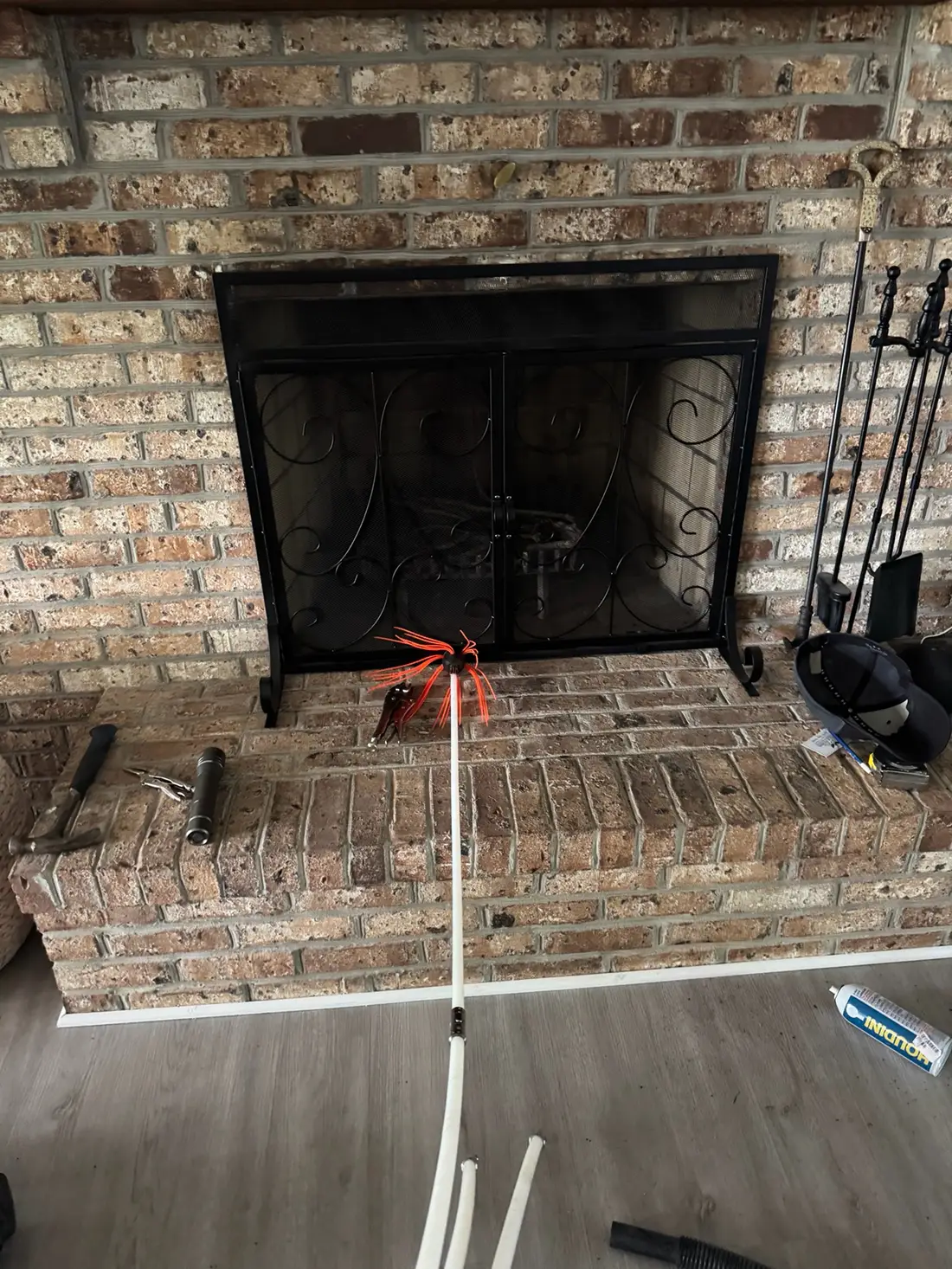
What sweeping actually removes
Wood smoke is unburned fuel vapor. When it cools on its way up the flue, it condenses into creosote — first as a flaky, brushable soot, then as a tarry coating, and in neglected chimneys as a hard, glazed layer that resists brushes and ignites fiercely. A professional sweep addresses all of it that brushing can reach: the flue walls from the firebox to the top of the chimney, the smoke chamber where the flue narrows and deposits collect thickest, and the firebox itself. What comes down is contained — sealed hearth, drop cloths, and a vacuum running during the work so soot ends up in our equipment, not on your furniture. If the camera shows glazed creosote that brushing cannot clear, we will tell you plainly and explain the options rather than pretend a brush solved it. Our guide to the three stages of creosote shows what each stage looks like and what each one needs.
How a proper sweep is done
The visit starts with protection: the hearth and the floor around it are covered, the fireplace opening is sealed against the work area, and furniture near the work path is moved or draped. The sweep itself works the flue with sectional rods and a brush matched to your flue's size and shape — round, square or oval, clay tile or steel — run from below, from above, or both, depending on the chimney's construction and access. The smoke chamber is cleaned by hand and with specialty tools, because its sloped walls and smoke shelf are where debris and creosote gather most. The damper is opened, checked and cleared of the soot that makes dampers stick and seals fail. Finally the firebox is brushed and vacuumed out, the ash removed, and the whole system given a visual once-over — the same areas our camera inspection examines in depth when it is booked with the sweep.
The damper, the smoke shelf, and other forgotten places
Homeowners picture the flue as a straight pipe; the parts of a chimney that cause the everyday complaints live at its edges. The smoke shelf — a flat ledge behind the damper — collects fallen creosote, brick fragments and occasionally a bird's abandoned nest, and a loaded shelf disrupts the draft and drops debris onto the damper until it will not close. A damper that will not close is an open hole in your home's thermal envelope all winter, and one that will not open fills the room with smoke at the first match. Sweeping is when these parts get cleaned and their condition gets noticed — a warped damper plate, a rusted frame, a shelf full of rubble — while the fixes are still small. This is also when a missing or rusted-out chimney cap gets spotted, ideally before the rain and the raccoons find the same opening.
How often: the honest answer
For a wood-burning fireplace or stove used as regular heat, the answer is once a year — not because a calendar says so, but because a season of burning deposits roughly the amount of creosote that should never be allowed to become two seasons' worth. Occasional users — a fire on weekends and holidays — can sometimes stretch the interval, and the way to know is not guessing: it is looking. An eighth of an inch of creosote buildup is the working threshold most sweeps use for "due," and a camera or a flashlight-and-mirror check during any visit tells us where your flue stands. Pellet stoves, gas fireplaces and oil furnaces use flues too, and theirs foul differently — ash and corrosive condensation rather than creosote — which is why our fireplace service covers them on their own schedules. Our fuller guide, how often a chimney should be swept, breaks the interval down by fuel and by how you actually burn.
What sweeping cannot fix
A brush removes deposits; it does not repair structure. Cracked flue tiles, gaps between liner joints, a crown shedding water into the masonry, mortar joints washed out by decades of weather — sweeping reveals these things, and our crews report them with photographs, but fixing them is masonry work or relining, quoted separately and in writing. Any sweep who discovers a "critical emergency" that must be repaired today, at a price that expires today, is running a script older than the trade itself. Real findings keep until you have had time to think — and to get a second opinion if you want one, with our photos in your hand.
Before, during and after your appointment
Before we arrive: let the fireplace go fully cold — no fire for at least 24 hours — and clear the hearth of wood, tools and anything fragile on the mantel. During: most sweeps take under an hour; heavily used flues and stove inserts take longer. You can stay in the room and watch; many customers do, and the before-and-after look up the flue with a light is part of the visit if you want it. After: the system is ready to use the same evening. You will know what came out of your chimney, what condition the flue is in, and — if the inspection was booked with it — exactly what, if anything, deserves attention before next season.