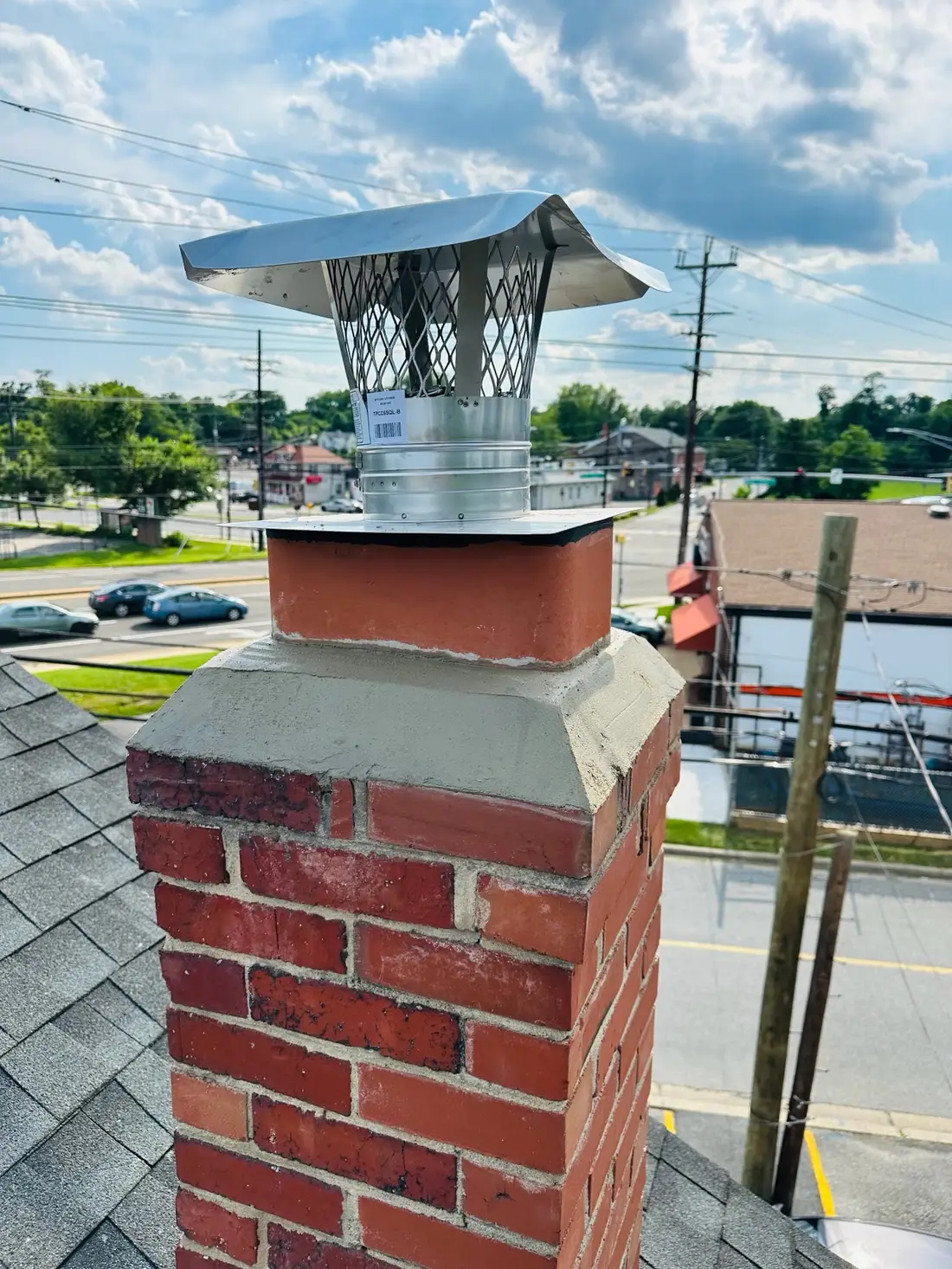
Of all the components on a chimney, the cap is the smallest, the cheapest and — measured by damage prevented per dollar — the most valuable. An uncapped flue is an open pipe into the heart of your home's structure, and everything the sky contains uses it: rain, snow, animals, leaves, and sparks going the other way. Here is the case, item by item.
Water: the enemy with a direct entrance
Rain falling into an open flue does not vanish politely. It lands on the smoke shelf and damper, rusting both; it soaks into the liner joints and the masonry from inside, feeding the freeze-thaw cycle that splits tiles and pops brick faces; it drips, eventually, into the firebox, where homeowners find it as a wet ash pile and a musty smell and blame everything but the open hole above. Exterior defenses — crown, flashing, joints — guard the chimney's walls. The cap guards its open mouth. A chimney can have perfect masonry and still rot from the inside through an uncapped flue, and we see exactly that, regularly, on inspections of otherwise well-kept homes.
Animals: the tenants you did not invite
To a raccoon, an open chimney is a hollow tree — warm, vertical, safe from predators — and raccoon families in chimneys are a spring tradition in this trade: the mother defends the flue like a fortress, and removal becomes a wildlife-specialist operation with a chimney full of nesting debris left behind. Squirrels fall in and cannot climb smooth tile. Birds nest in flues — and one species, the chimney swift, is federally protected: if swifts move in, they cannot legally be removed until they migrate in the fall, and your fireplace is theirs until then. Every one of these stories ends the same way — with a cap, installed after the fact, at a multiple of what it would have cost before. A screened stainless cap is the entire prevention.
Nests and debris: the blockage nobody sees
Even without tenants, an open flue collects: leaves, twigs, branches dropped by birds, and the nesting attempts of a dozen species. A blockage does not need to be total to be dangerous — a partial obstruction at the top of the flue disturbs draft, spills smoke, and in a furnace flue can push exhaust toward the living space. The debris also dams moisture against the flue walls. All of it accumulates silently above the damper where no homeowner ever looks, which is why caps and the annual sweep's top-of-flue check exist.
Sparks: the cap works both directions
The cap's mesh is also a spark arrestor. Wood fires throw embers; on a windy night, a strong draft carries them up and out. The screen stops what could land on a dry roof, in a gutter full of leaves, or in the yard's leaf litter. In dry and fire-prone regions this function alone justifies the cap; everywhere else it is a bonus on top of the water and animal case.
Material honesty: stainless or temporary
The cap market divides into caps that last and caps that visit. Galvanized steel rusts in flue-gas condensate and weather — a few years, typically — and fails by rusting open, often staining the stack on its way out. Stainless steel is the professional standard: decades of service, corrosion-proof in this application, strong enough to keep raccoons honest. When a quote says only "metal cap," it is describing the temporary kind. Ours specifies stainless, and the gauge, in writing — see the caps section of our caps & crowns page.
The arithmetic
A stainless cap, installed, costs less than the rusted damper it prevents, a fraction of one raccoon removal, a rounding error against repointing water-damaged joints or replacing split flue tiles. It is the rare home component whose absence is more expensive than its presence in essentially every scenario. If your chimney has a cap, have its material and condition confirmed at the next sweep. If it does not — or if the "cap" up there is a rusted galvanized survivor from another era — closing the top of your chimney is the best-value appointment on this entire website.