The fast answer: every chimney is sealed at the top by one of two things. A masonry chimney has a crown — a concrete slab that caps the brickwork and sheds water off the stack. A factory-built, or prefab, chimney has a chase cover — a metal lid that closes the top of the framed chase the flue runs through. Different materials, same job: keep water out of the top of the chimney. When either one fails, water enters from above and quietly damages almost everything below it.
Crown or chase cover — which top does your chimney have?
Look at what your chimney is made of. If it is brick or stone from the ground to the sky, it is masonry, and the flat surface around the flue tiles at the very top is the crown. If the chimney above the roof is a framed box sided with vinyl, wood or stucco, with a metal pipe or pipes coming out of it, it is a prefab chase, and the flat metal sheet covering that box is the chase cover. The distinction matters because the two fail differently and are repaired differently. Both are inspected from the roof on every caps and crowns visit we make, because neither can be judged honestly from the driveway.
What a crown does, and how it should be built
The crown is the chimney's own small roof. It seals the top of the masonry so rain lands on concrete and runs off, instead of soaking straight down into brick and mortar. A well-built crown has four features: it is cast from concrete, not smeared from mortar; it slopes away from the flue so water sheds outward; it overhangs the stack slightly, with a drip edge that throws water clear of the brick below; and it leaves an expansion gap around each flue tile, so the tile can grow with heat without cracking the slab from the inside. In freeze-thaw country across our Pennsylvania service area, a cracked crown meets winter water and the damage compounds a little more every season.
What a chase cover does on a prefab chimney
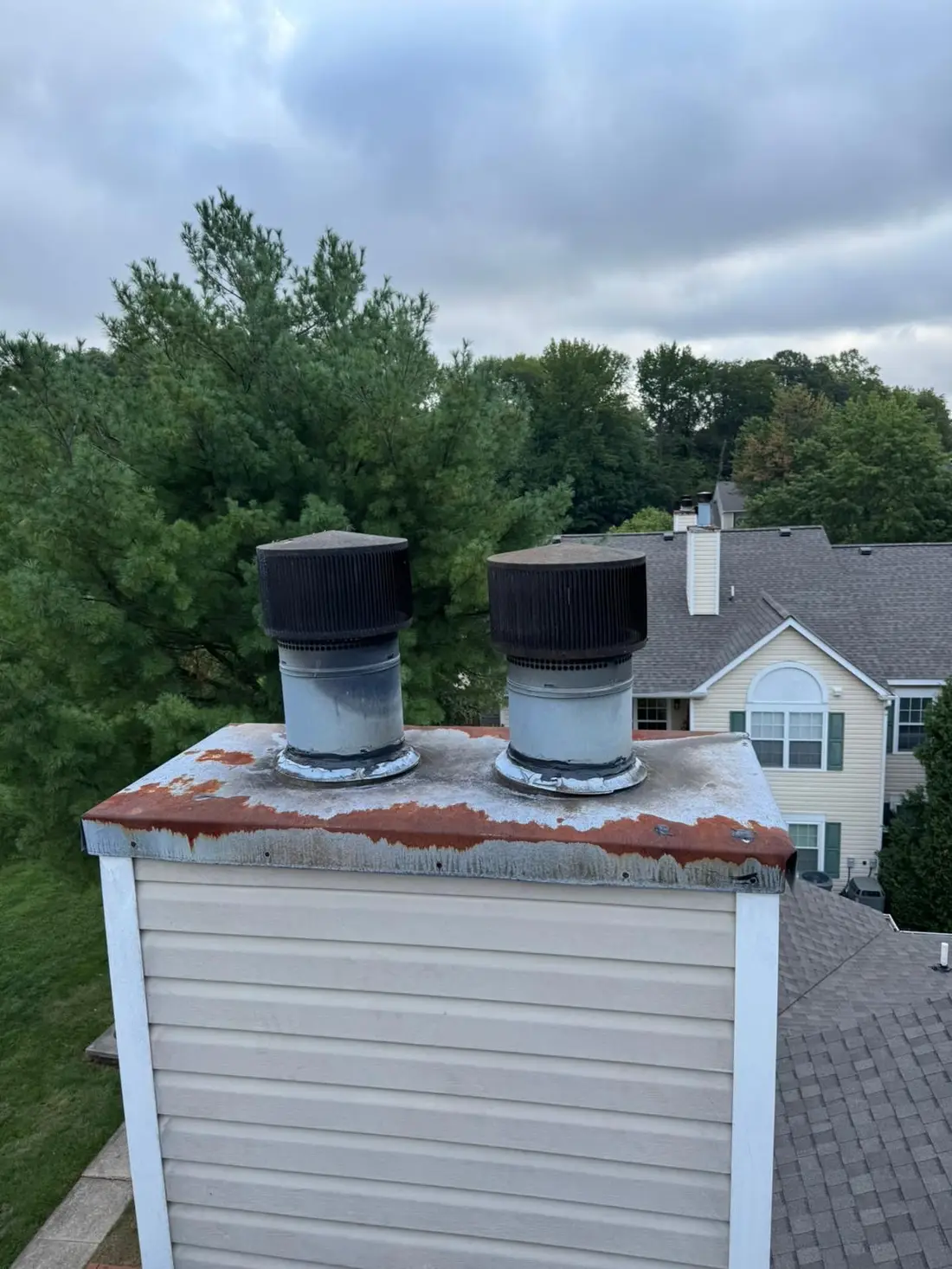
A prefab chimney's chase is a wooden frame, and wood and water are enemies. The chase cover is the single sheet of metal that roofs that frame: it wraps the top of the chase, the flue pipes pass through sealed collars in it, and the cap sits above it. When the cover is sound, the chase inside stays dry and the framing, insulation and flue supports last for decades. The weakness is the material many covers were made from. Builders often fitted plain galvanized steel, which rusts — first as staining, then pitting, then pinholes and open seams. Once it rusts through, every rain delivers water into the chase, where it rots framing from the top down and rusts the flue pipe itself. The cover in this article's photograph is typical: rusted across its whole surface, still shedding some water, but no longer sealing anything.
How each one fails: cracks versus rust and ponding
Crowns fail by cracking. Water finds a hairline, freezes, and wedges it wider; heat from the flue works the same crack from inside; sections loosen and eventually tilt or lift. Chase covers fail by rust and by ponding. Many were made dead flat, or have sagged with age, so rainwater sits on them in a shallow pool instead of running off — standing water on galvanized metal is rust on a schedule. The low spots appear around the flue collars first, which is the worst place for a leak, because water follows the pipe straight down inside the chase. Both failures are silent: the damage shows up somewhere else first — spalling brick below a bad crown, ceiling stains below a bad cover — which is why so many are misdiagnosed as roof or flashing leaks. Our guide to chimney leaks and water damage explains how those symptoms are traced back to the top.
Signs you can spot from the ground, and from inside
From the ground, look for rust streaks running down the side of a prefab chase, rust stains on the siding below the cover's edge, a crown that looks cracked or crumbling even through binoculars, white staining on the brick just below the top of a masonry stack, and pieces of concrete in the gutters. From inside, the clues are water sounds in the firebox during rain, rust on the damper, a musty smell near the fireplace after storms, and stains on the ceiling or wall where the chase passes through the house. In our Michigan service area, where snow sits on chimney tops for weeks, we also find covers bent under snow load and crowns split by meltwater that froze in place. Any one of these signs earns a roof-level look, which is why the top of the chimney is part of every camera inspection visit, not an extra.
Coat, repair or replace — how the call is made
Not every tired top needs demolition, and the honest answer depends on condition, not age. A sound crown with surface cracking can often be sealed with an elastomeric crown coating over cleaned, prepared concrete. A crown with deep cracks, loose sections or a flat profile that holds water needs rebuilding, with the slope, overhang and expansion gap the original lacked. A chase cover is judged differently: surface rust on a sound, well-sloped cover can be treated and monitored, but a cover that is pitted, pinholed or ponding is replaced — there is no coating that restores rusted-through metal. Replacement covers should be stainless steel, fabricated to the chase with a slight slope and raised, sealed collars around each flue. Galvanized-for-galvanized replacement simply restarts the same rust clock. Either way, the work pairs naturally with a new stainless cap, because the cap, crown and cover defend the top as one system — a point our article on why a chimney cap matters makes from the cap's side.
Why this fix usually comes before any other
Of all chimney repairs, work at the very top has the best return, because water entering at the top is the root cause of so much damage below it: the spalling brick, the eroded mortar joints and the rusted firebox parts that otherwise get repaired while the inlet stays open. Sealing the top first is the order that makes the other repairs last — repointing done under a leaking crown is work scheduled to be redone. That sequencing is part of how our masonry repair scopes are written: stop the water, then repair what the water damaged, in that order.
The bottom line
A crown and a chase cover do the same quiet job in different materials: they roof the chimney. Concrete crowns fail by cracking, metal chase covers fail by rusting and ponding, and both failures let water into the one place a chimney can least afford it — the top. If nobody has ever stood on your roof and looked at yours, that look is overdue. Call Eagle Chimney Pros at (855) 511-3197 or send the request form on this site, and we will photograph the top of your chimney and tell you plainly whether it needs coating, repair, replacement — or nothing at all.