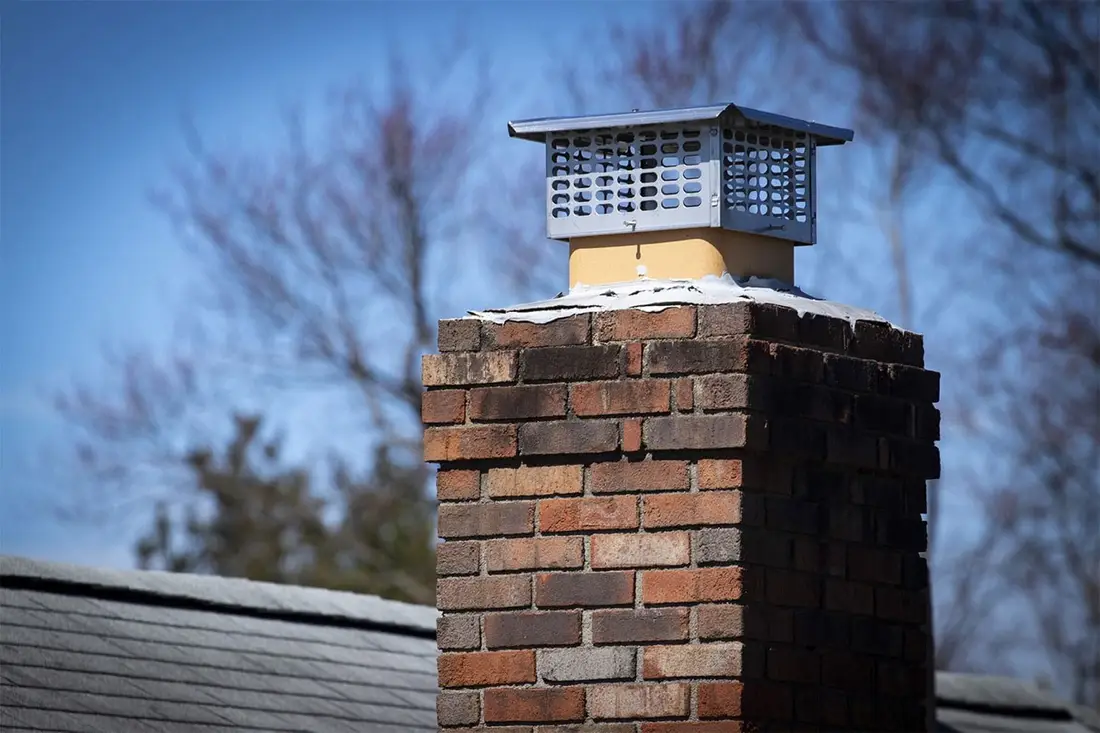
The fast answer: neither material wins in the abstract. An intact clay tile liner — tiles whole, joints sealed — is a sound liner and does not need replacing merely because it is old. Stainless steel earns its place when the clay has cracked through, its joints have opened, the flue was never lined at all, or a new appliance needs a differently sized flue. The decision is made from camera evidence inside your own flue, not from a material's reputation.
What a liner actually does
A flue liner is the sealed inner wall of the chimney, and it has three jobs at once. It contains the exhaust — carbon monoxide and the other products of combustion must travel from the appliance to the sky without leaking into walls or living spaces on the way. It protects the masonry itself, because flue gases are acidic and eat mortar from the inside out. And it insulates the house from the flue's heat: in a chimney fire, an intact liner is the barrier between an extreme event inside the flue and the wooden framing a few inches outside it. Every other part of the chimney is maintenance; the liner is containment. That is why liner condition dominates every camera inspection we perform.
Clay tile: how it is built, and its real strengths
Most masonry chimneys built in the last century were lined with clay tiles — sections of fired clay, stacked and mortared at the joints as the chimney rose. Clay itself is an excellent flue material: it shrugs off heat, resists the acids in flue gas, and does not corrode. A well-built clay liner in a well-kept chimney serves for many decades, and plenty of the flues we scan are exactly that. If that is what the camera finds in yours, the honest recommendation is to keep it, sweep it on its normal rhythm, and spend your money elsewhere. Clay's weakness was never the tile. It is everything around the tile: the joints between sections, and the stresses a working chimney applies to a rigid, brittle stack.
How clay liners fail
Four mechanisms do nearly all of the damage. First, the joints: the mortar between tiles is softer than the tiles and erodes under decades of acidic condensate — hardest in flues serving oil and gas appliances — until gaps open that pass heat and gas. Second, thermal shock: a chimney fire is the dramatic cause, but the everyday one is a cold flue struck by a hot fire, season after season, until tiles crack along their length. Third, water: rain entering through a failed crown or a missing cap freezes inside the flue and splits tiles from within. Fourth, movement: settling shifts tiles at their joints, leaving offsets like a small stair step. In the freeze-thaw winters across our Pennsylvania service area, the water mechanism alone accounts for much of what we find. None of these failures can be patched back to containment — a cracked tile is a hole in the pipe.
Stainless steel: how the modern liner works
A stainless relining replaces the failed inner wall with a continuous metal flue, drawn down inside the chimney and connected directly to the appliance. The system is more than the pipe: insulation wrapped or poured around the liner keeps exhaust gases hot so the flue drafts properly and shields the masonry from heat transfer; a top plate and storm collar seal the top under the cap; and the bottom connection is fitted to your fireplace, stove or furnace. The liner is sized to the appliance it serves: an oversized old flue drafts lazily and condenses creosote, while a correctly sized steel flue keeps gases moving. Steel does not crack, has no joints to erode along its length, and can be swept with the same brushes as tile — our full breakdown is on the chimney liners page.
Head-to-head: the differences that actually matter
Durability. Clay tiles are durable but brittle — they fail by cracking. Stainless flexes with thermal movement instead of fighting it, and its realistic enemies are incorrect sizing and poor installation, not age. Repair. A single damaged clay tile generally cannot be swapped without opening the chimney, which is why tile failure usually means relining rather than repair; a steel liner, once in, is one continuous component. Fit. Clay comes in fixed sizes chosen when the house was built; steel is chosen now, for the appliance you actually own — decisive when a wood stove insert or modern furnace moves into an old flue — a swap we see constantly in Columbus, Ohio homes. Evidence. Both materials are judged the same way — by camera, tile by tile or seam by seam, as our walkthrough of what happens during an inspection shows.
When to keep clay, when to choose steel
Keep the clay when the camera shows whole tiles, tight joints and a flue that suits its appliance — and protect it at the top of the chimney, where water gets in, and with regular sweeping. Choose steel when the camera shows any of the following: tiles cracked through, joints open enough to see the cavity beyond, tiles offset at their joints, heavy glaze that has been baking the flue for years (the creosote stages explain what glaze does to a flue), no liner at all in an older chimney, or an appliance change the old flue cannot serve. One more honest case: a furnace flue with failing tiles deserves priority over the fireplace flue, because it runs every day of the year whether anyone is watching it or not.
What relining day looks like — and what to ask first
Most residential relines finish in one to two days. The flue is swept clean first; where broken tile would block the new liner's path, the obstruction is removed — a call made from the camera footage, not from guesswork. The insulated liner is lowered into place, connected at the bottom, sealed at the top, and the appliance reconnected. Before you approve any of it, ask three questions: Can I see the footage of my flue? What diameter and insulation does the quote include, and why? What documentation do I receive? A liner quote given over the phone, sight unseen, is a guess wearing a number — height, diameter, insulation and tile removal all move the real scope. End the project with paperwork naming the system installed; it belongs with your home's records, for the next buyer and your insurer alike.
The bottom line
Clay versus stainless is not a contest to win in a showroom; it is a condition to read in a flue. Sound clay deserves keeping, failed clay deserves a steel successor, and the camera — not the calendar, and not a sales script — tells you which chimney is yours. If nobody has ever looked inside your flue, that look is the place to start: call Eagle Chimney Pros at (855) 511-3197 or send the request form on this site, and we will show you your own liner before anyone recommends a thing.